What if one loan could simplify your investment-property financing while putting every property on the line? A blanket mortgage for investment properties can combine multiple assets under one loan, potentially reducing the work of managing separate payments, maturities, and underwriting. But shared collateral changes the risk: a loan problem could affect the entire portfolio, and selling one property may depend on the lender’s release terms.
If you’re juggling several mortgages, it’s reasonable to look for a more efficient structure. It’s just as important to understand what flexibility you might give up. A blanket mortgage isn’t automatically the best fit, and the details in the loan documents matter as much as the convenience of one loan.
This guide explains how blanket mortgages work, how cross-collateralization and partial releases can affect your options, and what to ask about underwriting and loan terms before applying. You’ll also compare blanket financing with separate mortgages and portfolio lines of credit, so you can weigh the trade-offs and prepare specific questions for a financing professional.
Key Takeaways
- A blanket mortgage for investment properties places multiple assets under shared loan documents, but eligible properties and terms depend on the lender and loan structure.
- Check the property release clause closely. It sets whether and how an individual property can be removed from the loan’s collateral.
- Compare blanket financing with separate mortgages and a portfolio line of credit by weighing administration, collateral exposure, and plans to sell or refinance.
- Before applying, map your portfolio goals and hold periods, then gather details on ownership, property performance, existing liens, and planned transactions.
- Simplified Commercial Lending brokers financing for single-family, multifamily, and commercial properties, and can help you explore relevant options.
What Is a Blanket Mortgage for Investment Properties?
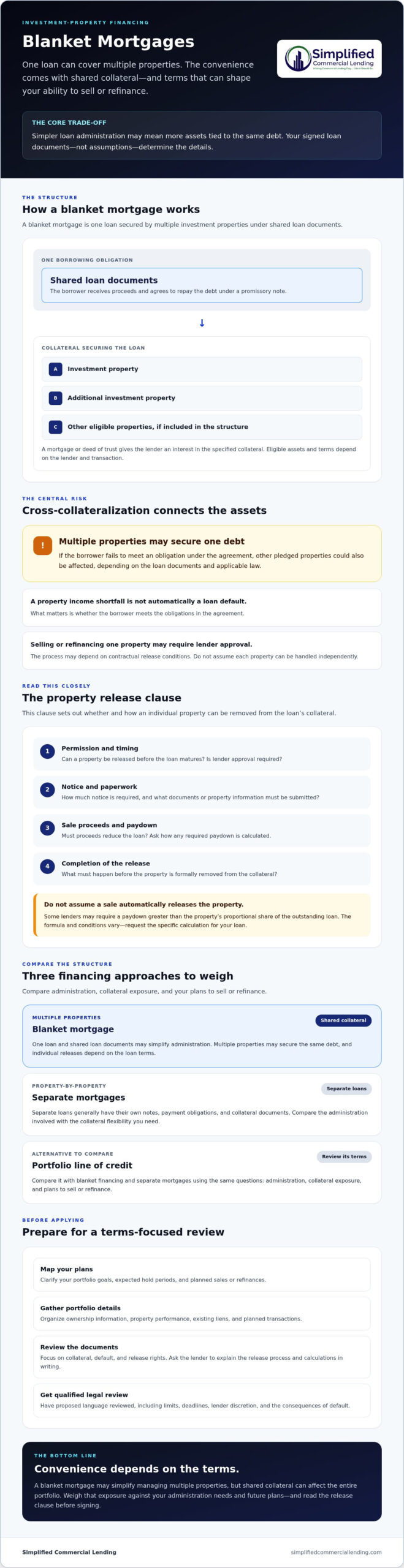
A blanket mortgage for investment properties is one loan secured by multiple investment properties under shared loan documents. Instead of arranging a separate mortgage for each asset, an investor may use one financing relationship for several properties. That can simplify administration, but it comes with a trade-off: because multiple properties may secure the same debt, a problem with the loan could affect more than one asset.
The number of properties, eligible asset types, borrower requirements, and loan terms depend on the lender and the specific structure. Don’t assume a property can be included or released later. Check the proposed loan documents, especially the sections describing collateral, default, and release rights.
How does a blanket mortgage work?
The borrower receives loan proceeds and agrees to repay the debt under a promissory note. The lender provides the loan. A mortgage or deed of trust is a separate security document that gives the lender an interest in specified property as collateral. Terminology and legal details depend on the transaction.
With a blanket loan, the security documents may identify multiple properties as collateral for the same borrowing obligation. That differs from owning several properties with separate mortgages: separate loans generally have their own notes, payment obligations, and collateral documents. A Blanket mortgage overview can help explain the basic structure, but the signed documents control the terms of your transaction.
What does cross-collateralization mean for an investor?
Cross-collateralization means that multiple assets secure one borrowing obligation. If a borrower defaults, the lender may have rights involving more than the property that first caused the problem, depending on the loan documents and applicable law. For example, a shortfall in one property’s income doesn’t automatically mean the loan is in default. But if the borrower fails to meet an obligation under the agreement, other pledged properties could also be affected.
Shared collateral can make a blanket mortgage efficient, but it may limit flexibility. Selling or refinancing one property could require lender approval or satisfaction of contractual release conditions. Don’t assume every property will be treated identically or that a lender can pursue every remedy in every circumstance. Review the documents with qualified legal counsel, and ask how default, collateral enforcement, and individual property releases are addressed before signing.
How Property Releases and Shared Collateral Shape a Blanket Mortgage
A property release clause can determine whether you can sell or refinance one asset without paying off the entire loan. It sets out if and how a property may be removed from the collateral securing the debt. Don’t assume that selling an asset automatically releases it, or that the lender must approve a release on your preferred timeline.
Release terms can make a portfolio loan flexible to manage, or difficult to change as your investment plans shift. For a blanket mortgage for investment properties, review the exact clause before signing and consider how it fits your expected sales, refinances, and hold periods. Bankrate’s overview of the advantages of blanket loans can help explain the appeal, but the loan documents determine your rights and obligations.
What should a property release clause address?
Read the clause for the conditions that apply to releasing an individual property. Ask the lender to explain the process in writing, including:
- Whether a release is permitted before the loan matures and whether lender approval is required.
- How much notice you must provide and what documents or property information you need to submit.
- Whether sale proceeds must be applied to the loan and how any required paydown is calculated.
- How the lender handles the request and what must happen before the property is formally removed from the collateral.
Some lenders may require a paydown greater than the property’s proportional share of the outstanding loan, but the formula and conditions vary. Ask for the specific calculation that would apply to your loan. Have qualified legal counsel review the proposed language, including any limits, deadlines, or lender discretion.
What happens if you sell or refinance one property?
If you sell, the loan documents govern whether proceeds must reduce the balance and what steps are needed to release the property. Until the release is completed, the asset may remain tied to the shared loan. That can affect the sale process, so clarify the required approvals and timing before you accept an offer or set a closing date.
Refinancing can raise a related issue. A new lender may require a clear lien position on the property, while the existing blanket loan may still treat it as collateral. If the existing lender doesn’t approve a release or the required conditions aren’t met, separating that property from the loan could be difficult.
Model planned sales and refinances before you sign. For each likely transaction, identify the release steps, possible paydown, and timing you would need. If you’re comparing financing structures, investment-property financing options can be a starting point for a discussion with Simplified Commercial Lending, a commercial mortgage broker. Blanket-mortgage availability and terms depend on lending partners and the proposed documents.
Blanket Mortgage vs. Separate Loans vs. Portfolio Line of Credit
Choose a financing structure based on how you plan to manage and use your properties. A blanket mortgage for investment properties combines eligible assets under one loan, but it isn’t automatically better than separate mortgages. A portfolio line of credit is different: it provides access to credit under its own terms, which may be revolving or structured another way. Confirm how each option works with the lender.
| Factor | Blanket mortgage | Separate mortgages | Portfolio line of credit |
|---|---|---|---|
| Collateral scope | Multiple properties may secure one loan. | Each loan is generally tied to its specified property. | Collateral and borrowing base depend on the credit agreement. |
| Administration | One loan relationship may consolidate financing for eligible assets. | Separate loans mean separate documents, payments, and maturities to track. | Credit access and repayment follow the line’s specific terms. |
| Sale flexibility | A sale may depend on the loan’s release conditions. | A sale can focus on the mortgage secured by that property, subject to its payoff terms. | Sale effects depend on collateral and borrowing-base requirements. |
| Potential use | Consolidating financing across several eligible properties. | Financing individual rentals and keeping obligations more property-specific. | Accessing credit for investment purposes, subject to approval and terms. |
When might one blanket loan suit a rental portfolio?
Consider this structure if consolidated financing is a priority and you expect to hold several eligible properties under terms that fit your plans. Before committing, review how future acquisitions, sales, or refinancing would work. If you expect frequent property turnover, restrictive release conditions could make consolidation less convenient. Availability and suitability depend on the lender, collateral, and loan documents.
When might separate mortgages or a portfolio line fit better?
Separate mortgages may be worth comparing if you want property-level financing and more independence when selling or refinancing individual rentals. If your goal is to access equity for investment, explore a portfolio line of credit instead. It isn’t another name for a blanket mortgage; its underwriting, collateral, draw, and repayment rules can differ. Simplified Commercial Lending offers portfolio lines of credit with underwriting based on property cash flow rather than personal income. Confirm the terms for any specific program.
For more detail, look for the article titled “portfolio lines of credit for rentals.” If you’re financing individual rental properties, consult the single-family investment-loan guide as another comparison point. No single structure fits every investor. Weigh administration against flexibility, then compare the documents and terms that matter to your portfolio.
How to Evaluate a Blanket Mortgage Before You Apply
Start with your investment plan, not the loan offer. A blanket mortgage for investment properties can shape how easily you manage, sell, or refinance assets, so compare its written terms with your expected hold periods and portfolio goals. Use this checklist to prepare:
- Define your goals and hold periods. Decide which properties you plan to keep, sell, refinance, or acquire, and when.
- Build a complete property schedule. List each property’s ownership, use, occupancy, income, existing debt, and any other liens.
- Gather property records. Organize leases, operating statements, insurance information, and other documents the lender requests.
- Review the proposed structure. Compare written term sheets and draft loan documents. Don’t rely on an informal summary instead of the actual terms.
- Test the terms against likely changes. Ask how planned sales, refinances, acquisitions, or ownership changes could affect the loan.
Which properties and borrower details should you prepare?
Be ready to explain how each asset is owned and used, how it performs, and what debt is already secured by it. Ask the lender how it will evaluate property cash flow and what borrower financial information it requires. Underwriting can vary by program, so confirm the exact records needed rather than assuming one standard applies. Keep figures and documents consistent across your property schedule, leases, and operating statements.
Which loan terms deserve close review?
Read the collateral description and cross-default provisions carefully. Then review release conditions, maturity, and prepayment terms. Ask how the agreement handles a default, property substitution, additional borrowing, or a change in ownership. If property cash flow is central to the underwriting, consult a DSCR requirements guide and ask how the lender calculates coverage and applies its criteria.
Review collateral scope and release rights together: knowing what secures the loan matters just as much as knowing how an asset can be removed. A release process may depend on lender approval, notice, documentation, or a required paydown. Confirm the details in the draft documents and discuss unclear language with qualified legal counsel.
Before moving forward, ask for written answers to open questions and compare the proposed terms against your portfolio plans. To discuss investment-property financing across single-family, multifamily, and commercial assets, explore financing options with Simplified Commercial Lending, a commercial mortgage broker. The company offers financing options that do not require tax returns, but eligibility and program terms depend on lending partners and the specific transaction.
Explore Investment-Property Financing Options with Simplified Commercial Lending
The right structure depends on more than the number of properties in your portfolio. Compare the convenience of consolidated financing with shared collateral, the terms for releasing an individual property, and your longer-term plans to hold, sell, refinance, or acquire assets. A blanket mortgage for investment properties may be worth exploring, but it isn’t automatically available or the best fit for every investor.
Simplified Commercial Lending is a commercial mortgage broker that works with investment-property financing across single-family rentals, multifamily properties, and commercial assets. Its options include separate property loans and portfolio lines of credit, which are distinct from blanket mortgages. The broker can help you explore structures that may fit your goals, but whether a lending partner offers a particular structure, and on what terms, depends on lender review.
What can a financing conversation clarify?
A useful conversation can help you identify which structures merit closer comparison: blanket financing, separate loans, or another option. Bring specific questions about eligible property types, underwriting, collateral scope, and release provisions. Ask how the proposed terms would work with your expected sales or refinances, rather than focusing only on the initial loan setup. Final availability and terms depend on the lending partner, property review, borrower information, and transaction details.
How can investors take the next step?
Prepare a property schedule that shows ownership, property use, performance, and existing debt. Add a short outline of upcoming acquisitions, sales, or refinances. Then identify your priorities. Do you value simpler administration, property-level flexibility, or access to credit for investment? Being clear about the trade-offs you can accept makes it easier to compare structures on the points that matter to your portfolio.
You don’t need to assume a blanket mortgage is the answer before starting the discussion. Share your properties and financing goals, then ask which current options may be relevant and what documents or terms need closer review. Explore investment-property financing options with Simplified Commercial Lending and take the next step at your own pace.
Choose Financing That Fits Your Portfolio Plans
A blanket mortgage for investment properties can consolidate financing, but shared collateral and release conditions may affect your ability to sell or refinance an individual asset. Compare those terms with separate loans and portfolio lines of credit, then weigh the structure against your hold periods and future plans.
Before moving forward, review the written loan documents, confirm which properties qualify, and understand how the lender handles releases and changes to your portfolio. Convenience matters, but so does knowing what flexibility you may be giving up.
Simplified Commercial Lending is a commercial mortgage broker serving investment-property borrowers across the United States. Its financing options span single-family rentals, multifamily buildings, and commercial assets. Blanket mortgage availability depends on lending partners and your transaction, so treat it as one option to investigate, not a guaranteed fit.
Explore investment-property financing options and discuss your properties and goals with Simplified Commercial Lending. With the right questions and a clear view of your priorities, you can move toward a financing structure that supports your next step.
Frequently Asked Questions
Can you sell one property covered by a blanket mortgage?
Yes, but whether you can sell it without paying off the full loan depends on the agreement’s property release clause. The lender may require advance notice, approval, specific documents, or a payment toward the loan balance before releasing the property from collateral. Confirm the process and timeline before planning a sale. Don’t assume that selling the asset automatically removes it from the loan.
Are blanket mortgages a good idea for rental properties?
They can suit investors who value consolidated financing across eligible rentals and expect to hold properties under terms that fit their plans. Shared collateral and release conditions may make selling or refinancing an individual property less straightforward, though. Compare the administrative convenience with the risks and limits in the documents. A blanket loan isn’t automatically better than separate mortgages; suitability depends on your portfolio goals and lender terms.
How is a blanket mortgage different from a portfolio loan?
A blanket mortgage describes a loan secured by multiple properties. “Portfolio loan” can mean different things, so ask the lender what structure it refers to. A portfolio line of credit is a distinct credit-line option, not another name for a blanket mortgage. Its collateral, access to funds, underwriting, and repayment terms depend on the agreement. Compare the documents and intended use, rather than relying on labels alone.
Does a blanket mortgage require a down payment for every property?
Not necessarily as a separate down payment for each asset. A lender may assess the combined collateral and the overall financing structure, but its equity, contribution, and underwriting requirements depend on the program and transaction. Ask how each property’s value and existing liens factor into the review. Get the required borrower contribution and any property-level conditions in writing before deciding whether the structure works for your portfolio.
What happens if you default on a blanket mortgage?
If you default, the lender may have rights against properties pledged as collateral, potentially including assets beyond the one associated with the issue. The exact consequences depend on the loan documents, the type of default, and applicable law. Review default and cross-collateral provisions before signing, and ask qualified legal counsel to explain unclear language. Don’t assume every default leads to the same enforcement outcome.
Can a blanket mortgage finance both single-family and multifamily properties?
It may, if the lender and loan structure allow those property types in the same transaction. Eligibility can depend on the assets, ownership, occupancy, underwriting, and the lender’s current guidelines. Some structures may limit which properties can be combined. Provide a property schedule and ask the lender to confirm in writing which single-family rentals and multifamily buildings qualify, along with how each will be evaluated and included in the collateral.